Appliance Leak Cleanup & Water Damage Restoration in New Jersey
A single failed appliance can put hundreds of gallons of water into your home — through the floor, into the walls, and down into the rooms below. PDQ Restoration provides 24/7 appliance leak cleanup across Northern New Jersey for every appliance that holds or moves water:
- Washing machines — burst supply hoses and drain overflows
- Water heaters — tank corrosion, valve failures, and full tank ruptures
- Dishwashers — door seal failures and drain line leaks
- Refrigerators — ice maker and water line leaks that hide for months
- Water softeners — brine tank cracks, valve failures, and regeneration overflows
- AC units — clogged condensate drains overflowing into ceilings and closets
We extract the water, dry the structure, and restore the damage. The appliance itself gets repaired or replaced by the appropriate trade — our job is making sure the water it released doesn't turn into rotted framing and mold. Call 973-604-6362 any hour, or contact us online.

Washing Machine & Supply Line Leaks
The supply lines and connections feeding your appliances are under constant pressure, and when one fails, water flows at full force until someone shuts it off — often while nobody's home. Even small drips from a worn hose, fitting, or pump hide behind the machine and soak the subfloor for weeks before anyone notices. The photo here is exactly how we find these losses: a failed connection tucked out of sight, with the damage already spreading.
Washing machine leaks damage floors, walls, cabinets, and the rooms below second-floor laundry areas. We extract standing water, pull the machines to dry behind them, and dry the floor structure underneath — the part a mop can't reach.

Water Heater Leaks
A tank water heater holds 40–80 gallons, and when the tank corrodes through, all of it ends up on your floor — followed by a continuous feed from the supply line until the water is shut off. The photo shows a typical call: a failed heater in a basement utility area with water already spread across the floor and into everything stored nearby.
We respond around the clock, extract the water, and dry the slab, framing, and drywall around the unit. Replacement of the heater itself is handled by the appropriate trade — we make sure everything around it is dry and documented first.

Dishwasher Leaks
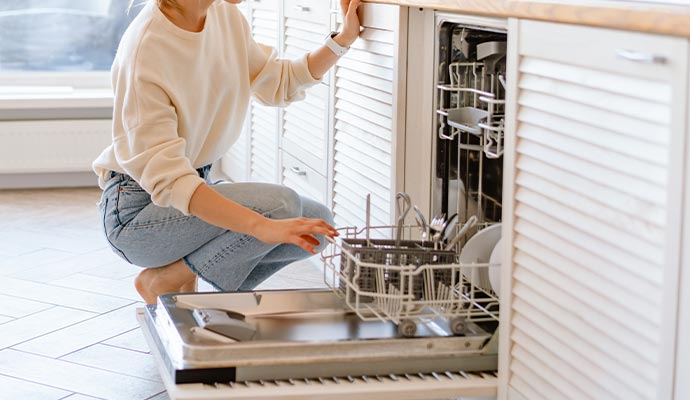
A dishwasher with a failing door gasket or drain line pushes water under the cabinets with every cycle. On a tile kitchen floor like the one pictured, the water often looks minor on the surface while it's wicking into the cabinet bases and subfloor grout lines underneath — which is why the first visible sign is usually swollen toe-kicks or a stain on the ceiling below.
We trace how far the water actually traveled with moisture meters, dry the subfloor and cabinet bases, and restore the damage. Caught early, cabinets and flooring can often be saved.

Refrigerator & Ice Maker Line Leaks
The water line feeding your refrigerator's ice maker is a thin plastic or copper tube under constant pressure, and it can seep behind the fridge for months before anyone notices — usually when the hardwood in front of it starts cupping. By then the water is under the flooring, not on top of it.
That's why the fix looks like the photo: the fridge pulled out, and commercial air movers drying the floor and wall cavity behind it. Surface-drying with towels doesn't touch the moisture in the wood — directed airflow and dehumidification do, and we verify it with meter readings before the fridge goes back.

Water Softener Leaking? What to Do Before It Ruins Your Basement
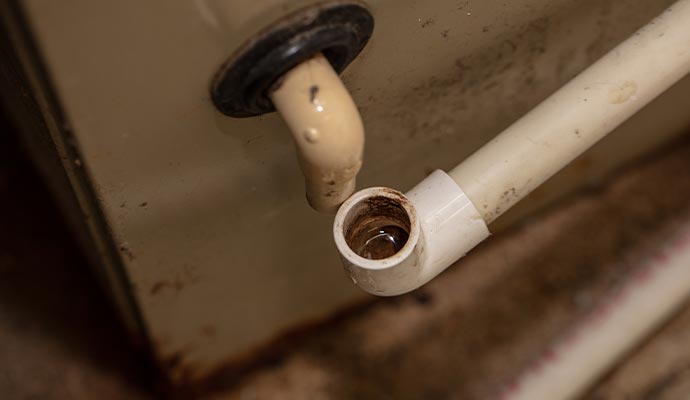
Water softeners fail in three common ways: the brine tank cracks, a valve or fitting fails, or the unit gets stuck in regeneration and overflows for hours. Softeners sit in utility closets and basements like the one pictured — tight spaces surrounded by finished flooring and stored belongings — so a softener leak is really a basement water damage event, and salty brine water is harder on flooring and metal than clean water.
If your softener is leaking: put the unit in bypass (the bypass valve is on the head where the pipes connect), shut the water to the unit if there's a dedicated valve, and keep everyone away from any water near outlets or the electrical panel. Then call us — we extract the water, dry the space, and document everything. Repair or replacement of the softener itself is handled by the appropriate trade.

The Damage You Can't See Is the Damage That Costs You
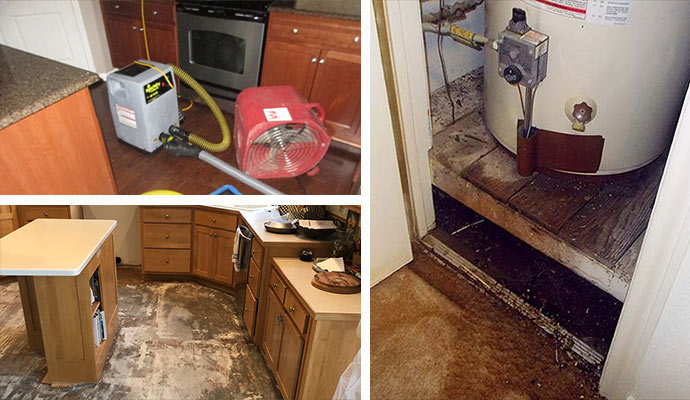
This photo is why appliance leaks get expensive: the water you mop up is a fraction of the water that traveled under the cabinets and into the floor structure. What's underneath stays wet for weeks, and that's where rot and mold start.
On every appliance leak we:
- Trace the water with moisture meters and thermal imaging — under cabinets, into wall cavities, through the subfloor
- Extract and dry to IICRC standards, verified with daily readings — not guesswork
- Document everything — photos, readings, and affected materials logged the way your insurance carrier needs
- Restore the damage — once dry, we handle the repair and rebuild so one company carries the job start to finish
The Insurance Part — How It Works With PDQ
Here's the part most homeowners don't know: we work for you, not the insurance company. On covered appliance losses, we bill your carrier directly at pre-negotiated industry pricing, we work with every carrier, and you pay only your deductible. There's never a fight about price — the only conversation is about scope, meaning what actually needs to be done to put your home back. So choose the company you trust to do the work right.
One more thing that matters: don't start cleaning up or throwing things out before the damage is documented. Moving soaked contents and mopping up destroys the evidence your claim depends on. Leave it as it is, stay clear of electrical hazards, and let us document first — it protects your claim.
Appliance Leak Cleanup — Frequently Asked Questions
Does homeowners insurance cover appliance leaks?
Usually yes, when the leak is sudden and accidental — a burst washer hose, a ruptured water heater tank, a failed dishwasher seal. What's typically not covered is gradual damage from a slow leak that was ignored, and the appliance itself is usually not covered — insurance pays for the damage the water caused, not a new washer. We document the loss so a covered claim is handled properly.
Does homeowners insurance cover water softener leaks?
Same rule: sudden and accidental failures — a cracked tank, a burst fitting — are generally covered, while long-term seepage and the softener unit itself are generally not. Because softener leaks happen in basements, coverage questions overlap with basement water damage; we document the cause and scope so your adjuster has what they need.
What should I do the moment I find an appliance leaking?
Stop the water: turn off the appliance's shutoff valve, or the main water valve if you can't find it. Keep everyone away from water near outlets, cords, or the electrical panel. Then call PDQ before you start cleaning up — documenting the damage as-is is what protects your insurance claim.
How long does drying take after an appliance leak?
Most appliance leak dry-outs run about three to five days, verified daily with moisture readings. It depends on how long the water sat and what it soaked into — a caught-it-immediately washer leak dries faster than a water heater that emptied while you were on vacation.
Can flooring and cabinets be saved after an appliance leak?
Often, if drying starts fast. Solid wood and tile tolerate water better than laminate and particleboard cabinet bases, which swell quickly. We take moisture readings and tell you honestly what's savable and what should be replaced — and what we remove goes into the documented scope for your claim.
Appliance Leak? Call PDQ Restoration Now
Whether it's a washing machine, water heater, dishwasher, refrigerator, water softener, or AC drain, PDQ Restoration's IICRC-certified team responds 24/7 with a 60-minute average response time — we extract, dry, document, and restore, and we work directly with your insurance carrier.
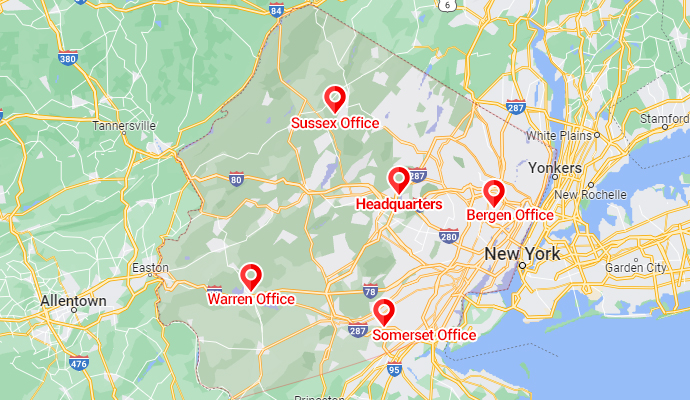
Contact PDQ Restoration today if you live in Morristown, Sparta, Parsippany, Wayne, Montclair, Paramus, Hackensack, Clifton, or any surrounding New Jersey community.


Other pages you may be interested in...